
Emergency lighting in Leeds
Design, install, test and certify emergency lighting to BS 5266. Monthly function tests, annual full-duration tests, LED upgrades and logbook management for commercial premises across West Yorkshire.
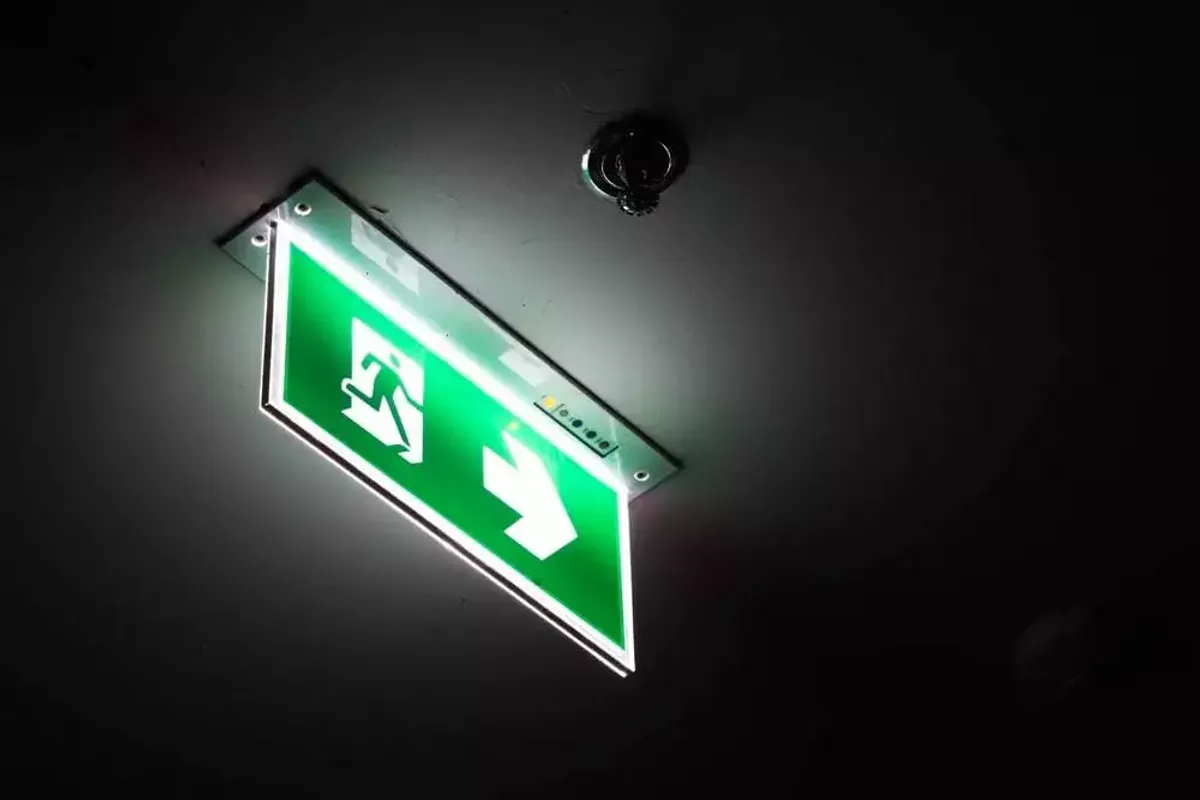
What emergency lighting covers
Emergency lighting is the system that illuminates escape routes when the normal supply fails. In commercial premises it is a fire-safety requirement under the Regulatory Reform (Fire Safety) Order 2005, designed and tested to BS 5266-1.
We design, install, test and certify emergency lighting for offices, retail, industrial, education and managed-property premises across Leeds and West Yorkshire.
What needs emergency lighting
BS 5266-1 part 7 sets out the categories of space that require emergency lighting:
- Escape routes — corridors, staircases, exits
- Anti-panic open areas — meeting rooms, open-plan offices, retail floors > 60 m²
- High-risk task areas — kitchens, plant rooms, areas where machinery is in use when the lights fail
- External escape — areas immediately outside final exit doors
The duration is normally three hours for most commercial premises; one hour is acceptable for premises that can be fully evacuated and not re-occupied during the same outage.
What we install
- Self-contained LED emergency fittings (the standard choice for new and replacement)
- Central battery systems for larger or more complex premises
- Self-test fittings for hard-to-reach installations (warehousing, atria, plantrooms)
- Maintained (always-on) and non-maintained (lights up on failure) fittings
- Exit signs and directional running-man signage
- Test switches and test panels per zone
What we test
- Monthly — function test (brief operation of every fitting), recorded in the logbook
- Annual — full-duration test (one hour or three hours depending on rating), recorded and certified
- Battery condition, lamp condition, fitting fixings and lens cleanliness
- Test-switch operation and label legibility
What you get
- Initial install: Electrical Installation Certificate (EIC) plus BS 5266-1 commissioning certificate
- Annual: full-duration test certificate, signed by a qualified person
- Logbook entries kept on site and a PDF copy in your file
- Photographic evidence of any failed fittings
- Quote within 48 hours for any replacements
Why use Martin Day Commercial
- NICEIC Approved Contractor — installations covered by the Platinum Promise
- BS 5266-1 design and testing competence in-house
- Bundled with planned electrical maintenance on most multi-site contracts
- 30+ years across Leeds and West Yorkshire commercial premises
Related
- Annual emergency-lighting tests scheduled inside planned electrical maintenance
- LED upgrade of normal lighting alongside emergency: energy-saving lighting
- For schools and education buildings specifically: electricians for schools
- Coverage across Leeds, Bradford, Wakefield, Huddersfield and Harrogate
Frequently asked questions
How often does emergency lighting need testing?
Monthly function test and annual full-duration test, in line with BS 5266-1. We log both in a dedicated emergency-lighting logbook held on site.
What is BS 5266?
The British Standard for emergency escape lighting in premises. It defines design, installation, commissioning, testing and certification requirements.
What happens if our emergency lighting fails its annual test?
We document the failure, replace or repair the affected fittings, and re-test. A failed test does not automatically make the premises unsafe, but it must be addressed and recorded before the next fire risk assessment.
Can you upgrade existing emergency lighting to LED?
Yes. Most fluorescent emergency fittings can be replaced with LED units that meet BS 5266 and cut maintenance frequency. Self-test fittings are an option for hard-to-reach installations.
Do you provide design as well as installation?
Yes. We design to BS 5266-1 part 7 lighting levels, including escape route, anti-panic open area and high-risk task area lighting. For complex sites we work to a fire engineer's design.